Anthropic Says Claude Found CRISPR-Like Enzyme System in Phage DNA
Anthropic said autonomous Claude agents surveyed 1.9 billion protein clusters and surfaced array-associated reverse transcriptases, a bacteriophage enzyme
By AI World
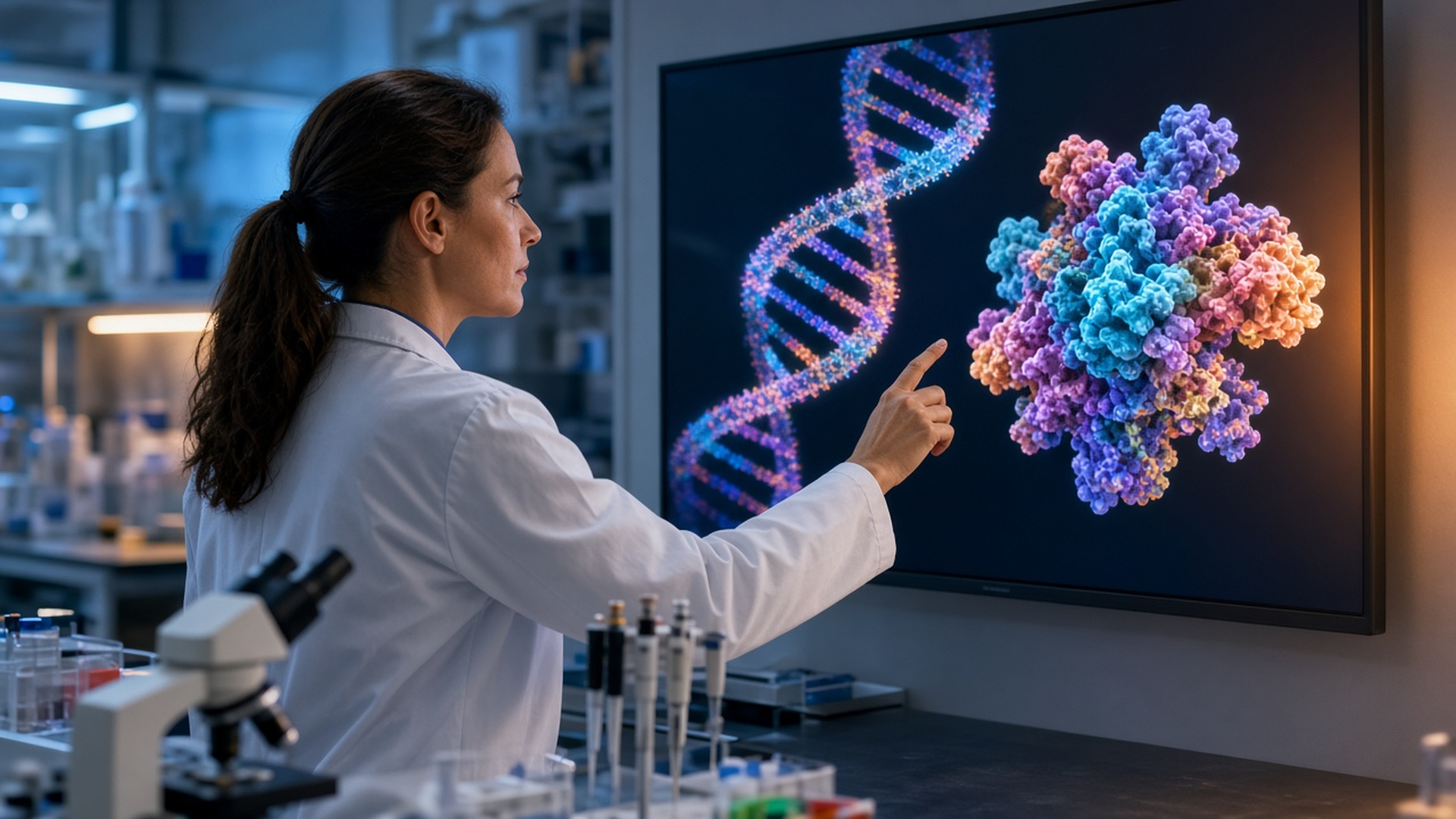
🧬 **Anthropic** on Wednesday reported the first result from its new **San Francisco** biology lab: **Claude** agents autonomously flagged a bacteriophage enzyme family whose tandem **DNA** repeats resemble **CRISPR** arrays, even though the system lacks **Cas** genes and its purpose is still unknown.
Roughly **950** agent instances spent about **21 hours** scanning **1.9 billion** protein clusters in public metagenomic data, according to a company blog post and accompanying preprint. The workflow linked **Claude Code**-style workers to wet-lab follow-ups. They named the pattern **array-associated reverse transcriptases**, or **ART**, built around a **reverse transcriptase**, a partner gene, and **3** to **21** short repeats per array.
Early experiments show **ART** arrays transcribed into distinct short **RNAs** during **Staphylococcus** phage infection, sometimes reaching **8%** of measured viral **RNA** within **15 minutes**. That expression profile mirrors programmable bacterial defenses, but **Anthropic** stressed it has not proved the enzyme is active or that the **RNAs** are substrates.
If **ART** proves biologically meaningful, it would join **CRISPR** and other repeat-driven systems as a potential biotechnology lever. For now, the finding shows an **AI** harness can initiate a molecular lead that human scientists are still testing, as frontier labs debate how much autonomy to grant research agents. 🔬