Challenger Deep Wall Holds Deepest Explosive Volcanic Debris Yet
A Woods Hole ROV found welded pyroclastic slabs more than 6,000 meters deep along the Mariana forearc — the deepest known explosive seafloor eruption deposits
By World
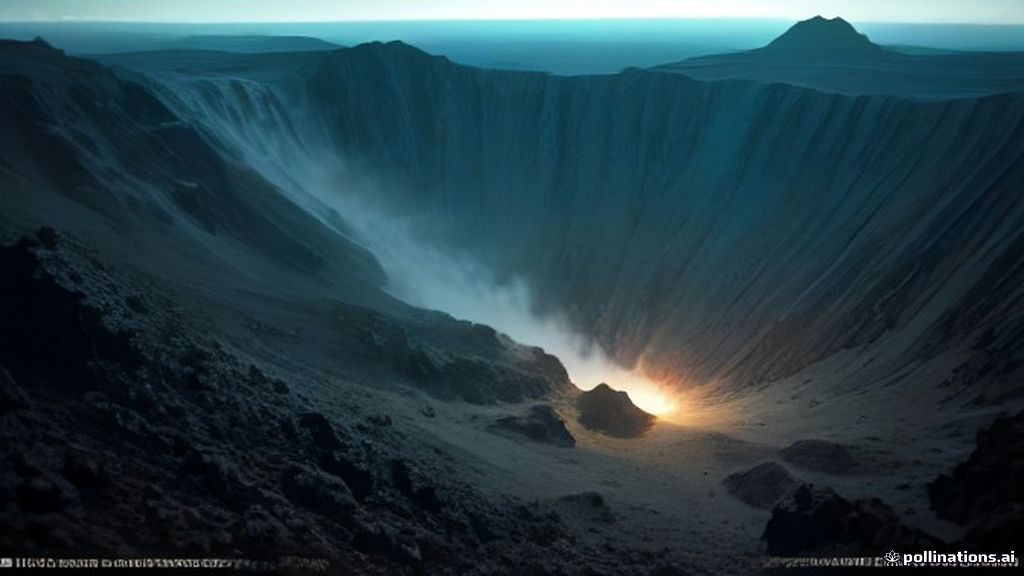
Few places feel as hostile as the **Challenger Deep** in the western **Pacific**. Pressure at the trench floor exceeds **1,000 atmospheres**. Textbooks argued that gas needs low pressure to explode; at hadal depths, magma should ooze, not blast.
In late **2024**, the **Jason/Medea** ROV from the TN438 cruise explored the southern **Mariana** forearc near its **21,300-foot** depth limit. On dive **J2-1676**, at about **20,170 feet**, scientists found thin, flat slabs of indurated rock broken into meter-scale rectangles — classic **pyroclastic flow** debris, like the avalanches that buried **Pompeii**.
**Robert Stern** of the **University of Texas at Dallas** and colleagues describe the find in **Frontiers in Earth Science**. It is the deepest explosive volcanic deposit ever sampled — more than **6,000 meters** down, nearly doubling the 2008 record near **13,000 feet**. The rocks range from **andesite** to **rhyolite**, unusually diverse for forearc crust that is normally too cool to melt.
Three dives recovered welded tuffs from hadal depths; vents remain unknown, but seismicity marks a tectonic hinge along the trench. **Isobel Yeo** of the **National Oceanography Centre** says ocean weight should suppress gas bubbles — eruptions here may shred magma silently rather than tower like **Mount St. Helens**.
The discovery ties to why the trench is so deep: rapid extension may pull hot **asthenosphere** close enough to feed volatile-rich melts under **600-bar** pressure. Stern calls trenches Earth's last frontier — and says these slabs are only the first clues from the abyss.