OpenAI Unveils MedChemBench to Test AI Drug-Discovery Reasoning
OpenAI released MedChemBench, a 99-task benchmark built from 117 medicinal-chemistry papers that tests whether frontier models can read structures, explain
By AI World
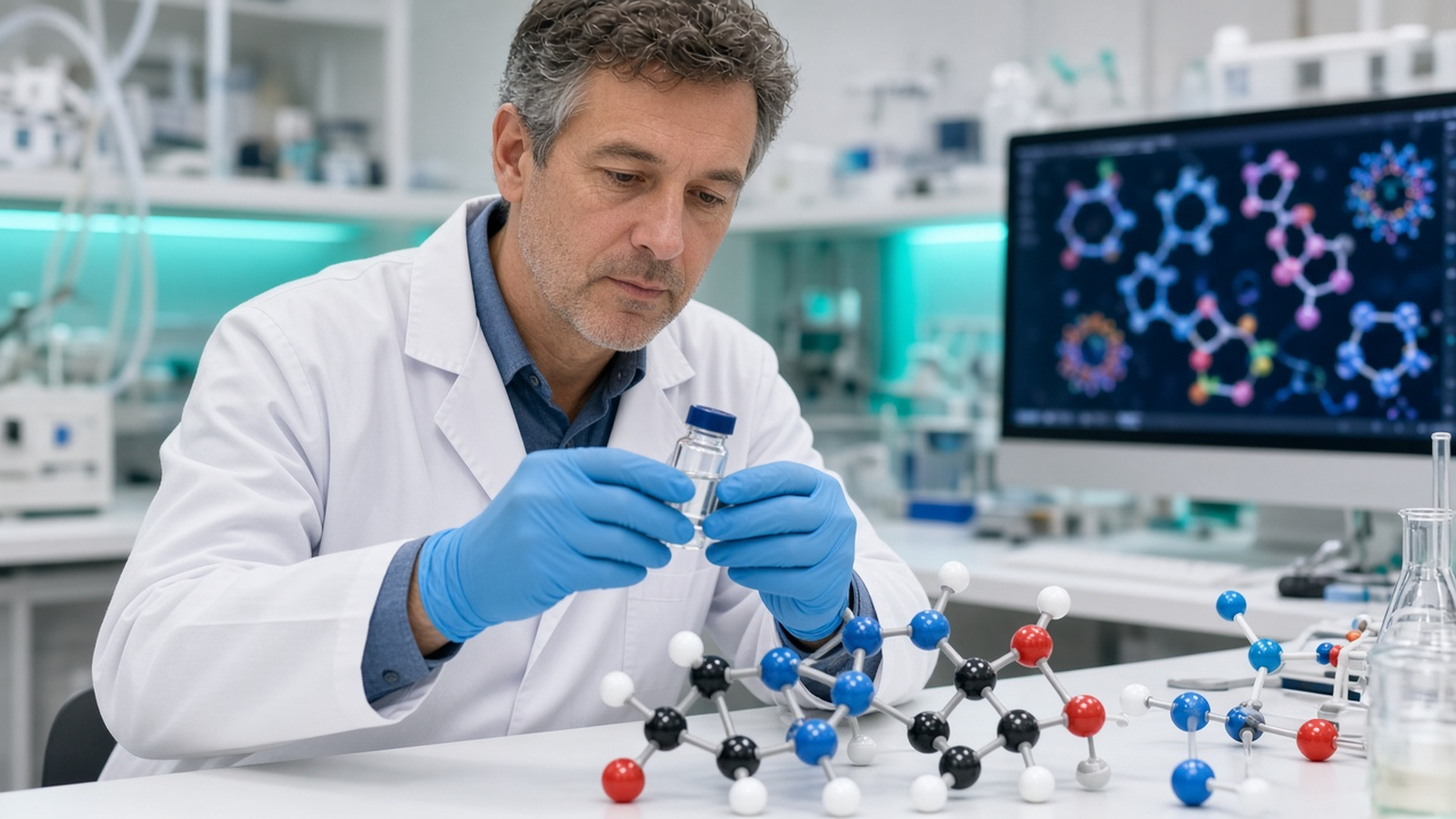
🧪 **OpenAI** released **MedChemBench** on **Thursday**, a **99-problem** benchmark that measures how well frontier models perform medicinal-chemistry reasoning from published papers and patents rather than generic multiple-choice tests.
The suite draws on **117** sources and **761** molecular structures, asking models to reconstruct compounds from chemical drawings, explain experimental evidence, rank drug candidates, and predict properties such as potency, permeability, and metabolic stability. Tasks mirror decision points real chemists face when improving one trait can worsen another.
At shared **xhigh** reasoning settings, **GPT-6.2 Astra** earned **84.5 percent** of available credit, edging **GPT-6 Astra** at **83.3 percent**, **GPT-6.1 Sol** at **82.0 percent**, and **GPT-5.6 Sol** at **58.2 percent**. **OpenAI** said structure reconstruction and scientific explanation remain model strengths, while compound selection and numerical prediction lag near **50 percent**.
**MedChemBench** matters because pharma labs want **AI** copilots that read structures accurately before suggesting the next experiment. **OpenAI** cautioned that models answered from historical evidence in a single attempt without laboratory tools, so scores do not prove clinical impact or rule out training-data overlap.
The benchmark joins a wave of domain-specific **LLM** evaluations as labs stress spatial chemistry, tradeoff reasoning, and calibrated uncertainty for high-stakes discovery work. 🔬